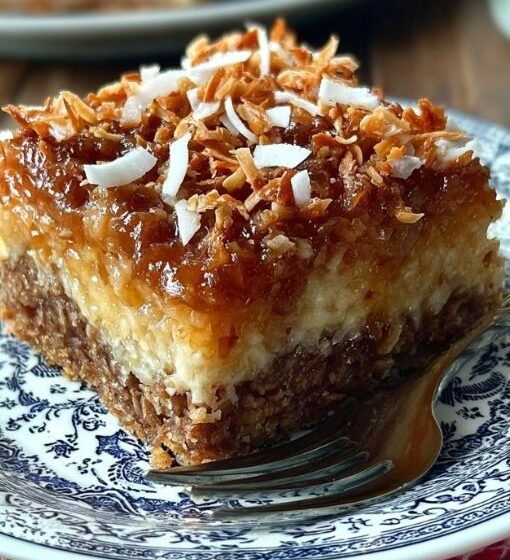
Moist, tender, and warmly spiced — a beautifully old-fashioned oatmeal cake soaked in a rich, nutty, coconut broiled topping that caramelizes into a sticky, golden, praline-like crust right on top of the cake. A humble, deeply satisfying classic that has been passed down through generations for very good reason.
INGREDIENTS
- 1.5 cups boiling water
- 1 cup rolled oats
- 0.5 cups unsalted butter, softened
- 1 cup granulated sugar
- 1 cup brown sugar, packed
- 2 large eggs
- 1 teaspoon vanilla extract
- 1.5 cups all-purpose flour
- 1 teaspoon baking soda
- 0.5 teaspoons baking powder
- 0.5 teaspoons salt
- 1.5 teaspoons cinnamon
- 0.5 teaspoons nutmeg
- 0.25 teaspoons allspice
- 0.5 cups unsalted butter (for topping)
- 1 cup brown sugar, packed (for topping)
- 0.33 cups whole milk or heavy cream (for topping)
- 1.5 cups sweetened shredded coconut (for topping)
- 1 cup chopped pecans or walnuts, toasted (for topping)
- 1 teaspoon vanilla extract (for topping)
- pinch of salt (for topping)
STEPS
- Soak the oats: Pour the boiling water over the rolled oats in a bowl and stir to combine. Let soak for exactly 20 minutes until the oats are completely softened and have absorbed most of the water. This soaking step is essential — it gives the cake its signature moist, tender crumb and prevents the oats from being chewy or gritty in the finished cake.
- Preheat and prep: Preheat your oven to 350°F (175°C). Grease a 9×13-inch baking pan generously with butter and line with parchment paper. Set aside.
- Cream butter and sugars: In a large bowl, beat the softened butter, granulated sugar, and brown sugar together with a hand mixer on medium-high speed for 3–4 minutes until pale, light, and fluffy. Scrape down the sides as needed.
- Add eggs and vanilla: Add the eggs one at a time, beating well after each addition. Add the vanilla extract and mix until combined.
- Mix the dry ingredients: In a separate bowl, whisk together the flour, baking soda, baking powder, salt, cinnamon, nutmeg, and allspice until evenly combined.
- Combine: Add the dry ingredients to the butter mixture and fold gently with a rubber spatula until just combined. Fold in the soaked oats and any remaining liquid until evenly incorporated and the batter is smooth and uniform. Do not overmix.
- Bake: Pour the batter into the prepared pan and spread into an even layer. Bake at 350°F for 30–35 minutes until the top is golden brown, the edges have pulled away slightly from the sides, and a toothpick inserted into the center comes out clean or with just a few moist crumbs.
- Make the broiled topping: While the cake bakes, melt the butter in a medium saucepan over medium heat. Add the brown sugar and milk or cream and stir constantly until the sugar dissolves and the mixture comes to a gentle boil. Cook for 2 minutes then remove from heat. Stir in the shredded coconut, toasted pecans or walnuts, vanilla extract, and pinch of salt until well combined.
- Broil the topping: As soon as the cake comes out of the oven, immediately spread the warm coconut pecan topping evenly over the entire surface of the hot cake. Place under the broiler on high for 2–4 minutes until the topping is deeply golden, bubbling, and caramelized in spots. Watch extremely closely — the coconut and sugar can go from perfectly golden to burnt in under a minute under the broiler.
- Cool and serve: Let the cake cool in the pan on a wire rack for at least 20 minutes before slicing — the topping needs time to set and firm up slightly. Serve warm or at room temperature cut into generous squares.
NOTES Tips: Soaking the oats in boiling water for the full 20 minutes before adding them to the batter is the most important step — it softens them completely so they melt into the cake during baking and give it an extraordinarily moist, tender crumb. Do not rush this step. The broiled topping is the crown jewel of this cake and what makes it legendary — watch it under the broiler with absolute vigilance as it can burn in seconds. Toasting the pecans or walnuts before adding them to the topping deepens their flavor dramatically — never skip this step. This cake is best served warm when the topping is still slightly sticky and fragrant but is equally delicious at room temperature the next day when the topping has set into a firm, chewy, praline-like crust. Keeps covered at room temperature for up to 3 days or refrigerated for up to 5 days.