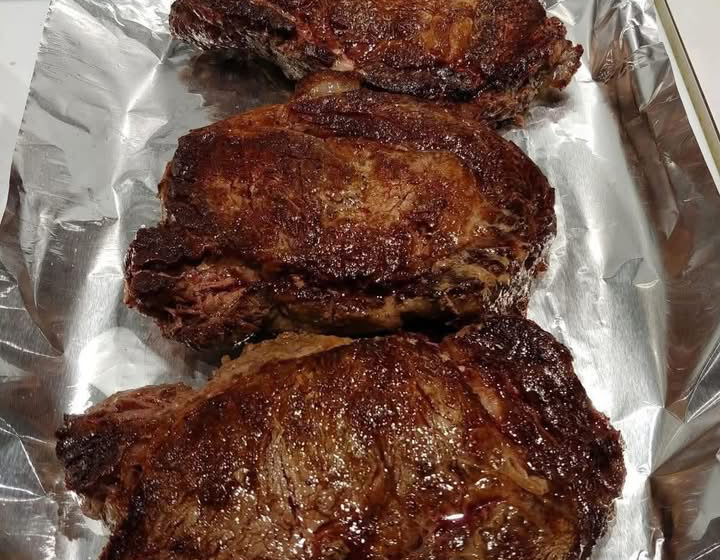
These pan-seared ribeye steaks are deeply browned on the outside, tender and juicy inside, and finished with butter, garlic, and fresh herbs. Ribeye is naturally rich and flavorful because of its marbling, so it only needs simple seasoning and careful cooking.
This recipe is perfect for a special dinner, weekend meal, or whenever you want steakhouse-style results at home.
Prep time: 10 minutes
Resting time before cooking: 30 minutes
Cook time: 10–14 minutes
Final resting time: 8–10 minutes
Servings: 3
Ingredients
- 3 ribeye steaks, about 1 to 1½ inches thick
- 1½ tablespoons olive oil or avocado oil
- 2 teaspoons kosher salt, or to taste
- 1 teaspoon freshly ground black pepper
- 1 teaspoon garlic powder, optional
- 3 tablespoons unsalted butter
- 4 garlic cloves, lightly crushed
- 3 sprigs fresh thyme or rosemary
- Flaky salt for serving, optional
Instructions
1. Bring the steaks closer to room temperature
Remove the steaks from the refrigerator about 30 minutes before cooking.
Pat every side very dry with paper towels. A dry surface helps the steak develop a dark, flavorful crust instead of steaming in the pan.
2. Season the steaks
Season both sides generously with salt and black pepper.
Add garlic powder if desired. Press the seasoning gently into the meat so it stays in place during cooking.
For the best flavor, season the steaks shortly before cooking. You may also salt them several hours ahead and refrigerate them uncovered.
3. Heat the skillet
Place a heavy cast-iron skillet or stainless-steel pan over medium-high to high heat.
Allow the pan to heat for several minutes. It should be very hot before the steaks are added.
Add the oil and swirl it around the pan. The oil should shimmer but not burn heavily.
4. Sear the first side
Carefully place the steaks in the hot skillet, leaving space between them.
If your skillet is not large enough, cook the steaks in batches. Crowding the pan lowers the temperature and prevents proper browning.
Do not move the steaks for the first 3–4 minutes. Let them develop a deep brown crust.
5. Flip the steaks
Turn each steak with tongs and sear the second side for another 3–4 minutes.
Use the tongs to hold the fatty edges against the pan for about 30–60 seconds so the fat becomes browned and slightly crisp.
6. Add butter, garlic, and herbs
Reduce the heat to medium.
Add the butter, crushed garlic, and thyme or rosemary to the skillet.
When the butter melts and begins to foam, tilt the pan slightly. Use a spoon to repeatedly pour the hot herb butter over the steaks for 1–2 minutes.
This adds flavor and helps the steaks cook evenly.
7. Check the internal temperature
Use an instant-read thermometer inserted into the thickest part of each steak.
Remove the steaks from the heat when they reach approximately:
- Rare: 120–125°F or 49–52°C
- Medium-rare: 130–135°F or 54–57°C
- Medium: 140–145°F or 60–63°C
- Medium-well: 150–155°F or 66–68°C
- Well done: 160°F or 71°C and above
The temperature will usually rise a few degrees while the steaks rest.
For thick steaks that are still undercooked inside, place the skillet in a preheated 400°F or 200°C oven for 3–6 minutes.
8. Rest the steaks
Transfer the steaks to a clean plate, cutting board, or foil-lined tray.
Spoon a little of the garlic-herb butter over the top.
Let the steaks rest uncovered or loosely covered with foil for 8–10 minutes.
Resting allows the juices to redistribute through the meat. Cutting too early can cause much of the juice to run out.
9. Slice and serve
Serve the steaks whole or slice them against the grain.
Finish with flaky salt, additional black pepper, or a spoonful of the butter from the skillet.
Helpful Tips
Choose well-marbled steaks
Look for ribeye steaks with thin streaks of fat running throughout the meat. This marbling melts while cooking and gives the steak its rich flavor and tenderness.
Dry the surface thoroughly
Moisture prevents browning. Pat the steaks dry immediately before seasoning and cooking.
Use a very hot pan
The skillet must be properly heated to create a dark crust. Add the steaks only when the oil is hot and shimmering.
Avoid flipping repeatedly
Let the steaks cook undisturbed long enough to form a crust before turning them.
Use a thermometer
Cooking time varies depending on the steak’s thickness, starting temperature, and the strength of the burner. A thermometer is the most reliable way to avoid overcooking.
Rest before slicing
Even a perfectly cooked steak can lose moisture if it is sliced immediately after leaving the pan.
Oven-Finished Method for Thick Steaks
For steaks thicker than 1½ inches, sear them for 2–3 minutes per side in an oven-safe skillet.
Add the butter, garlic, and herbs, then transfer the skillet to a 400°F or 200°C oven.
Bake until the desired internal temperature is reached, usually another 4–8 minutes.
Remove the steaks slightly before they reach their final temperature because they continue cooking while resting.
Easy Garlic-Herb Butter
For extra flavor, mix:
- 4 tablespoons softened butter
- 1 minced garlic clove
- 1 teaspoon chopped parsley
- ½ teaspoon chopped rosemary or thyme
- Pinch of salt
- Pinch of black pepper
Shape the mixture into a small log and refrigerate until firm. Place a slice on each hot steak before serving.
What to Serve with Ribeye Steak
These steaks pair beautifully with:
- Creamy mashed potatoes
- Roasted potatoes
- Garlic butter mushrooms
- Green beans
- Roasted asparagus
- Creamed spinach
- Macaroni and cheese
- Fresh garden salad
- Dinner rolls
- Grilled vegetables
Storage
Allow leftover steak to cool completely.
Store it in an airtight container in the refrigerator for up to three days.
Keep the steak whole when possible, as whole steaks retain moisture better than pre-sliced meat.
Reheating
Skillet method
Heat a small amount of butter in a skillet over low heat.
Add the steak and warm gently for a few minutes on each side.
Oven method
Place the steak in a baking dish and add a spoonful of broth or butter.
Cover loosely with foil and warm at 275°F or 135°C for about 15–20 minutes.
Avoid overheating, as this can dry out the meat.
Frequently Asked Questions
Can I use a different cut of steak?
Yes. New York strip, sirloin, filet mignon, or boneless chuck-eye steaks can be cooked using the same method. Cooking times may vary.
Can I cook the steaks without butter?
Yes. Use only oil for searing. The butter adds richness but is not essential.
Why did my steak not develop a crust?
The pan may not have been hot enough, the steak may have been wet, or the pan may have been overcrowded.
Should I cover the steaks while resting?
You may cover them loosely with foil, but wrapping them tightly can soften the crust.
Can I marinate ribeye steaks?
You can, but good-quality ribeye usually does not need a marinade. Salt, pepper, butter, garlic, and herbs are often enough.
Final Notes
The key to a great ribeye steak is simple: begin with well-marbled meat, dry it thoroughly, use a very hot skillet, monitor the internal temperature, and give it enough time to rest.