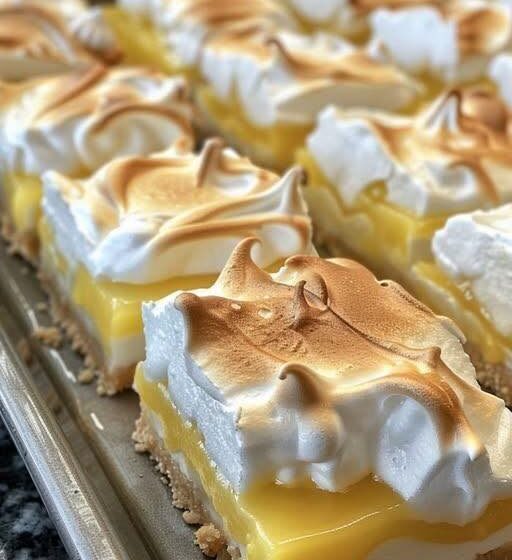
Bright, tangy, and impossibly elegant — buttery, golden pastry cups or cookie shells filled with a silky, vibrant lemon curd and crowned with a billowy, toasted meringue that is crisp on the outside and marshmallowy soft within. A stunning, sunshine-filled treat that is as beautiful to look at as it is to eat.
INGREDIENTS
- 1.5 cups all-purpose flour
- 0.25 cups powdered sugar
- 0.25 teaspoons salt
- 0.5 cups unsalted butter, cold and cubed
- 1 large egg yolk
- 2 tablespoons ice water
- 4 large egg yolks (for lemon curd)
- 0.75 cups granulated sugar (for lemon curd)
- 0.5 cups fresh lemon juice (from about 4 large lemons)
- 2 teaspoons lemon zest
- 0.5 cups unsalted butter, cubed (for lemon curd)
- pinch of salt (for lemon curd)
- 4 large egg whites (for meringue)
- 1 cup granulated sugar (for meringue)
- 0.25 teaspoons cream of tartar
- 0.5 teaspoons vanilla extract (for meringue)
- pinch of salt (for meringue)
STEPS
- Make the pastry dough: In a large bowl, whisk together the flour, powdered sugar, and salt. Add the cold cubed butter and work it in with your fingertips until the mixture resembles fine breadcrumbs. Add the egg yolk and ice water and mix until the dough just comes together. Flatten into a disc, wrap in plastic wrap, and refrigerate for 30 minutes.
- Bake the pastry cups: Preheat your oven to 375°F (190°C). Roll the chilled dough to 1/8-inch thickness on a lightly floured surface. Cut into circles and press into a greased mini muffin tin or tart molds, fitting snugly into the bottom and up the sides. Prick the bases with a fork, line with parchment, and fill with pie weights or dried beans. Blind bake for 12 minutes, remove the weights and parchment, and bake for a further 5–7 minutes until golden and dry. Cool completely.
- Make the lemon curd: In a medium saucepan, whisk together the egg yolks, granulated sugar, fresh lemon juice, and lemon zest until smooth. Cook over medium-low heat, stirring constantly with a wooden spoon or heatproof spatula, for 8–10 minutes until the curd thickens enough to coat the back of a spoon and holds a line when you drag your finger through it. Remove from heat and whisk in the cold cubed butter one piece at a time until completely melted and silky. Add the pinch of salt. Strain through a fine mesh sieve for an ultra-smooth finish. Press plastic wrap directly onto the surface and refrigerate until completely cool and set — at least 1 hour.
- Fill the shells: Spoon or pipe the chilled lemon curd generously into each cooled pastry cup, filling to just below the rim. Return to the refrigerator while you make the meringue.
- Make the Swiss meringue: Combine the egg whites, granulated sugar, cream of tartar, and pinch of salt in a large heatproof bowl set over a saucepan of barely simmering water. Whisk constantly for 3–4 minutes until the sugar is completely dissolved and the mixture is hot to the touch — about 160°F on a thermometer. Remove from the heat and beat with a hand mixer or stand mixer on high speed for 5–7 minutes until the meringue is glossy, thick, and holds stiff, shiny peaks. Add the vanilla extract and beat for 30 more seconds.
- Top with meringue: Spoon or pipe the meringue onto each lemon curd-filled cup in generous, dramatic swirls and peaks — the more dramatic the better. Make sure the meringue touches the edges of the pastry to seal it completely and prevent it from shrinking.
- Toast the meringue: Using a kitchen torch, toast the meringue in slow circular motions until it is beautifully golden and lightly charred in spots. Alternatively place under a very hot broiler for 1–2 minutes — watch extremely closely as it can go from golden to burnt in seconds.
- Serve: Serve immediately for the most dramatic presentation or refrigerate for up to 2 hours before serving.
NOTES Tips: Straining the lemon curd through a fine mesh sieve after cooking produces an extraordinarily smooth, silky filling with no traces of cooked egg — always take this step for the most polished result. The lemon curd must be completely chilled before filling the pastry cups — warm curd will soften the pastry and make the meringue slide off. Swiss meringue — made by heating the egg whites and sugar together over simmering water before whipping — is far more stable than French meringue and holds its shape beautifully for hours without weeping or collapsing. Making sure the meringue touches the edges of each pastry cup before toasting is essential — gaps between the meringue and the crust allow steam to escape during torching and cause the meringue to pull away from the edges. Fresh lemon juice is non-negotiable — bottled lemon juice lacks the bright, vibrant flavor that makes this dessert shine. These treats are best served on the day they are made while the pastry is crisp and the meringue is at its most dramatic.
Sonnet 4.6