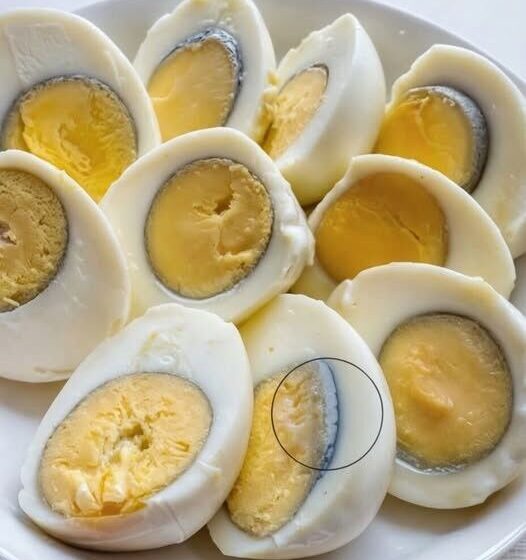
If you’ve ever sliced into a hard-boiled egg and noticed a green or gray ring around the yolk, you’re not alone. It’s a common kitchen mystery—and the good news is, it’s completely harmless.
But what actually causes it?
The Science Behind the Green Ring
The greenish layer forms due to a simple chemical reaction between two natural elements found in eggs: iron (in the yolk) and sulfur (in the egg white).
When eggs are cooked for too long or at too high a temperature, sulfur in the white reacts with hydrogen to form hydrogen sulfide gas. This gas then travels toward the yolk, where it reacts with iron to form iron sulfide, which appears as that gray-green ring.
Why It Happens
The main reasons this reaction occurs are:
- Overcooking the eggs
- Cooking at too high a temperature
- Not cooling the eggs quickly after boiling
The longer the egg stays hot, the more time this reaction has to happen.
Is It Safe to Eat?
Yes—completely safe.
Even though the color might look unappetizing, the egg is still perfectly edible. The taste might be slightly different (a bit more sulfurous), but it’s not harmful in any way.
How to Prevent the Green Ring
If you want perfectly yellow, creamy yolks every time, here’s what to do:
1. Don’t overcook
Bring eggs to a boil, then remove from heat and let them sit covered for about 9–12 minutes.
2. Use an ice bath
Immediately transfer eggs into cold water or ice water after cooking. This stops the cooking process instantly.
3. Avoid high heat for too long
Gentler cooking helps reduce the sulfur reaction.
Pro Tip for Perfect Eggs
For that bright golden yolk with no discoloration, timing and cooling are everything. A quick ice bath is your best friend—it locks in texture, color, and flavor.
Final Thoughts
That green ring around your hard-boiled egg yolk might look strange, but it’s just science at work. With a few simple adjustments, you can easily avoid it and get perfectly cooked eggs every time.
So next time you see it, don’t panic—it’s not a mistake, just chemistry in your kitchen 🥚✨