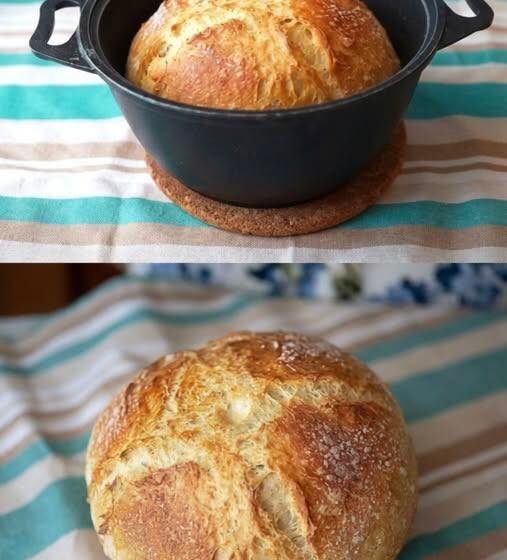
There is something deeply comforting about baking your own bread, especially when the recipe is truly simple. Simple Dough Bread is the kind of everyday, no-fuss loaf that fits perfectly into real life. It doesn’t require special equipment, complicated techniques, or hard-to-find ingredients—just basic pantry staples and a little patience. The result is a soft, fluffy bread with a lightly golden crust and a mild flavor that works for breakfast, sandwiches, or alongside soups and stews.
This recipe is ideal for beginners who are new to bread baking, but it’s also perfect for experienced home cooks who want a reliable, homemade loaf without spending hours in the kitchen. The dough is easy to handle, forgiving, and versatile. Once you master this simple dough, you can customize it with herbs, seeds, or whole grains to suit your taste.
Ingredients (Makes 1 standard loaf)
- 500 g (4 cups) all-purpose flour
- 7 g (2¼ teaspoons) instant dry yeast
- 1½ teaspoons salt
- 1 tablespoon granulated sugar
- 300 ml (1¼ cups) warm water (about 38–40°C / 100–105°F)
- 2 tablespoons vegetable oil or olive oil
Detailed Instructions
1. Activate the Yeast
In a large mixing bowl, combine the warm water and sugar. Sprinkle the dry yeast over the top and gently stir. Let the mixture sit for 5–10 minutes until it becomes foamy. This step confirms that the yeast is active and ready to help the dough rise.
Tip: If the mixture does not foam, the water may have been too hot or too cold, or the yeast may be expired. Start again with fresh yeast.
2. Mix the Dough
Add the oil and salt to the yeast mixture and stir. Gradually add the flour, one cup at a time, mixing with a spoon or your hand until a rough dough forms. The dough should be soft and slightly sticky but not wet.
Once the dough comes together, transfer it to a lightly floured surface.
3. Knead the Dough
Knead the dough by hand for 8–10 minutes. Push it away from you with the heel of your hand, fold it back over itself, turn, and repeat. As you knead, the dough will become smooth, elastic, and less sticky.
If the dough sticks too much, sprinkle in small amounts of flour—but avoid adding too much, as this can make the bread dense.
4. First Rise
Shape the dough into a ball and place it in a lightly oiled bowl, turning it once to coat all sides. Cover the bowl with a clean kitchen towel or plastic wrap.
Let the dough rise in a warm place for 1 to 1½ hours, or until it has doubled in size. This slow rise develops flavor and creates a light texture.
5. Shape the Loaf
Once risen, gently punch down the dough to release excess air. Turn it out onto a lightly floured surface and shape it into a loaf by flattening it slightly and rolling it tightly from one end to the other.
Place the shaped dough into a greased loaf pan (about 23 × 13 cm / 9 × 5 inches).
6. Second Rise
Cover the loaf pan and let the dough rise again for 30–45 minutes, until it rises just above the rim of the pan. This second rise ensures a soft, airy crumb.
7. Bake the Bread
Preheat your oven to 180°C (350°F). Bake the bread for 30–35 minutes, until the top is golden brown and the loaf sounds hollow when tapped on the bottom.
If the top browns too quickly, loosely cover it with aluminum foil during the last 10 minutes of baking.
8. Cool Properly
Remove the bread from the oven and take it out of the pan immediately. Place it on a wire rack and let it cool for at least 20–30 minutes before slicing. Cooling allows the crumb to set and prevents a gummy texture.
Serving Ideas
Simple Dough Bread is incredibly versatile and can be enjoyed in many ways:
- Sliced warm with butter or honey
- Toasted for breakfast with jam or cheese
- Used for sandwiches and grilled bread
- Served alongside soups, stews, or salads
Its mild flavor makes it suitable for both sweet and savory toppings.